Bird Species of Bereketli Garagum Nature Reserve
More than 238 species of birds live in the Karakum desert. Of these, 61 species occur in the “Bereketli Garagum” State Nature Reserve. Most pass through only briefly, crossing the reserve twice a year during spring and autumn migration. Some also stop here in winter, feeding before they continue their journey. Not every bird, however, can adapt to the harsh conditions of desert life.
Resident and Migratory Birds of the Reserve
The cream-colored courser (Cursorius cursor) — Turkmens call it çürçüri — is an endemic species of the Karakum desert.
The reserve’s resident birds include:
- the cream-colored courser
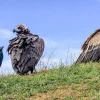
- the brown-necked raven
- the owl
- the saker falcon (ütelgi, Falco cherrug)
- the desert partridge
- the dove
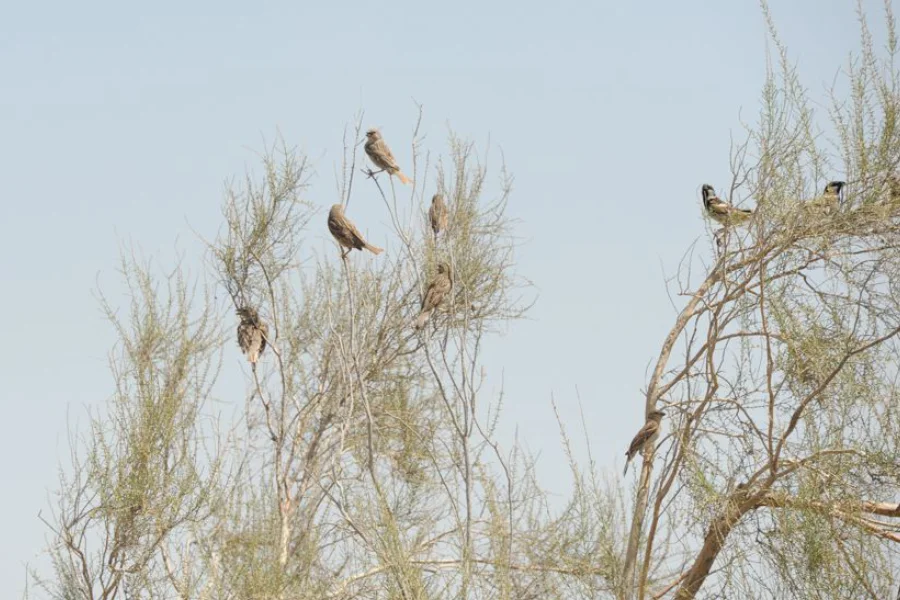
- the saxaul sparrow (Passer ammodendri)
- the field sparrow
- the mollatorgaý (a lark species)
- the desert sparrow (Passer simplex)
- the Turkestan ground jay (Podoces panderi)
In contrast, other species nest in the reserve and leave once breeding ends. These include:
- the pin-tailed sandgrouse
- the saxaul sparrow
- the short-toed snake eagle
- the desert falcon (çöl togany)
- the common çekeýik
- the hindi serçesi
- the desert çürlentgi
Birds Characteristic of the Region
This region’s characteristic birds also include the çakyryk, the togdar, and the sandgrouse (bagyrtlak), alongside several species already listed above — the Turkestan ground jay, the cream-colored courser, the brown-necked raven, and the desert lark (Ammomanes deserti).
Birds That Nest in Saxaul Thickets
Some species need saxaul thickets to nest. As a result, the short-toed snake eagle, the Turkestan ground jay, and the brown-necked raven all build their nests directly in saxaul bushes.
The Cream-Colored Courser — a Desert Specialist
The cream-colored courser stands out among the region’s desert birds. In fact, it has adapted fully to desert life. Its legs are long, and its feet are strong, with short toes. It rarely flies; instead, it runs quickly and nimbly across the sand. Even its digging habits reflect this adaptation to the desert landscape.
The courser’s diet includes grasshoppers, night-flying moths, ants, flies, and other insects, as well as their larvae. It also feeds on pests that damage sand-binding vegetation. Meanwhile, nesting takes place in March and April, usually among the branches of gandym (Calligonum) or cherkez (Salsola richteri) shrubs. The nest itself is bowl-shaped, with a roof somewhat like a magpie’s.
Turkmens named the bird çürçüri after its “chur-chur” call. Kazakhs, however, noticed how often it runs across the sand and named it “zhorga” — meaning “ambler” or “pacer.”
Source: mineco gov tm