Mapping the Range of the Conehead Mantis in Turkmenistan
Ongoing field surveys are steadily reshaping what biologists know about the conehead mantis in Turkmenistan. This striking insect’s range is turning out wider — and higher in elevation — than earlier records suggested. The species, Empusa pennicornis Pallas, 1773, belongs to the order Mantodea and the family Empusidae. Scientists consider it a Central Asian endemic that also lives in Uzbekistan, Kyrgyzstan, and Tajikistan. Turkmenistan’s Red Data Book has listed the species since 1999. It appears in the 2011 and 2024 editions too, with a status of Near Threatened.
A Distinctive, Light-Drawn Predator
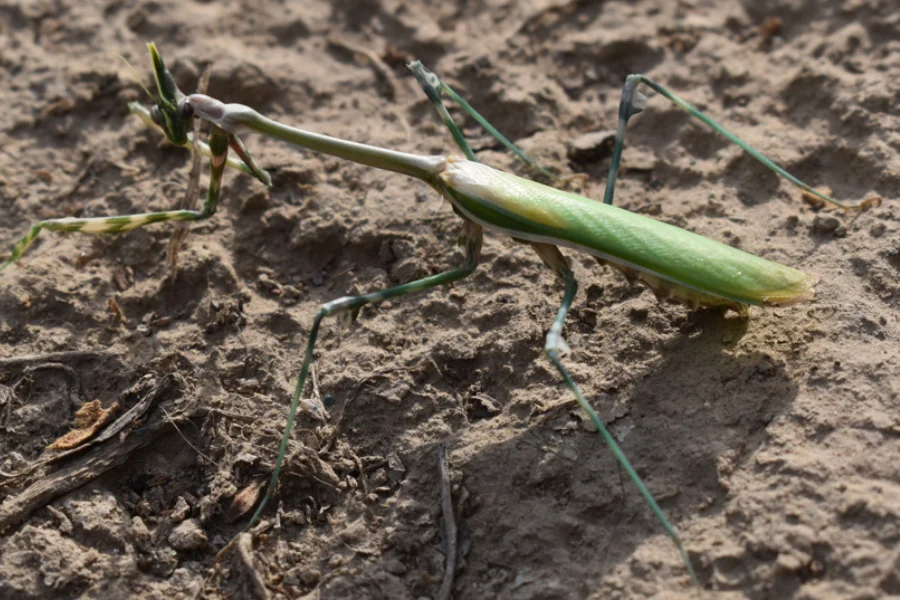
The conehead mantis reaches 50–65 mm in length. Its yellow-green coloring blends into the grasses and shrubs it inhabits. Its common name comes from the horn-like projection on its head, a trait typical of the genus. The species is nocturnal: it shelters among plants by day and hunts insects at night. Mature adults and late-stage larvae overwinter. Artificial light draws the mantis out, since it pulls prey within easy reach. This habit brings the insect close to people. Individuals sometimes land on clothing without any sign of fear, which puts them at risk of harm.
New Records Push the Known Range Higher
Recent monitoring has extended the species’ documented elevation range considerably. Researchers recorded it in the Dushakerekdag area at roughly 2,300 metres above sea level in 2024. The following year, they found it in the Murzedag area above 1,200 metres. By mid-June 2026, a survey team had recorded it near the Sekizyap stream (N 38°02.377′, E 57°47.031′). Earlier fieldwork adds to this record too. During Ustyurt plateau surveys on 22 October 2019, researchers noted a daytime larva near Khodjasuv (placeholder spelling — verify against established English transliteration). In May 2020, a survey team recorded a single individual in black saxaul thickets within the Shasenem nature sanctuary (restricted-status reserve; verify official English designation). It was the first record for that site.
Habitat and Ecological Role
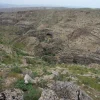
Scientific literature has typically placed the species in foothill zones: wormwood-covered slopes, mixed grass steppe, and sandy black saxaul desert. The Dushakerekdag observations tell a different story. They show the mantis also occupies high mountain belts, which broadens the known ecological picture. As a nocturnal predator, the conehead mantis helps regulate insect populations across these arid and semi-arid ecosystems.
Conservation Measures
The Red Data Book recommends two key steps. It calls for stronger habitat protection and less pesticide use across the pastureland where the species occurs. Continued monitoring will help fill the remaining gaps in its distribution and ecology. Taxonomic databases such as the Catalogue of Life and GBIF offer a useful starting point. Recording sightings such as the one near Sekizyap (internal link placeholder — insert real URL) adds directly to this growing picture.
Recommended

Source: mineco gov tm