Black-bellied Sandgrouse in Turkmenistan: A Desert Bird Under Watch
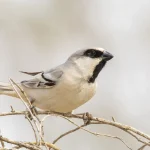
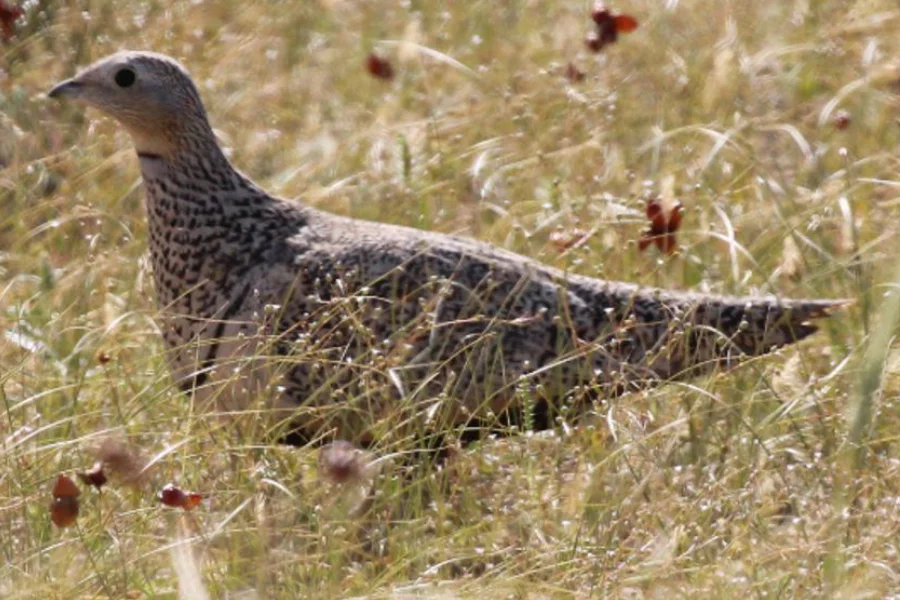
Researchers have documented four sandgrouse species in Turkmenistan, and the black-bellied sandgrouse (Pterocles orientalis) is by far the most numerous. Locals call it “tural.” This pigeon-sized bird of the desert plains has long been a familiar sight across the country’s arid lowlands — and, in earlier generations, a valued quarry for hunters.
Four Species, One Family
Turkmenistan is home to four members of the sandgrouse family, Pteroclidae. Alongside the black-bellied sandgrouse, these include the pin-tailed sandgrouse (Pterocles alchata), Pallas’s sandgrouse (Syrrhaptes paradoxus), and the spotted sandgrouse (Pterocles senegallus). Historical records place the spotted sandgrouse in the Amu Darya valley near the village of Kelif, though no one has reported a sighting there in recent years. Researchers at the country’s nature reserves continue to monitor the migratory movements and resident populations of the other three species, tracking their numbers and distribution. The IUCN Red List currently classifies all four as Least Concern, though local monitoring still matters for following regional trends.
Migration, Nesting and Habitat
The black-bellied sandgrouse is a partial migrant. Most birds arrive in Turkmenistan in March and the first half of April, then leave again in October, while a resident population stays on the country’s plains year-round. The species favors desert and semi-desert areas with dense, compact soil, as well as foothill terrain. Nests are simple scrapes in clay ground, and chicks typically hatch in mid-June.
A Daily Journey for Water
During the summer months, black-bellied sandgrouse travel long distances every day to reach water. Flocks head to watering points early in the morning, and activity usually peaks between 8 and 10 a.m. After drinking, adults soak their belly feathers and carry water back to their chicks, which drink directly from the wet plumage. Some local residents describe watching the birds wade into water and soak their feathers during the summer heat.
Conservation at Köpetdag Nature Reserve
The Mäne-Chäche protected area within Köpetdag State Nature Reserve hosts large numbers of black-bellied sandgrouse in October and November. Reserve staff carry out protection measures there every year and, in winter, also organize supplementary feeding in areas where sandgrouse gather alongside cranes and bustards. In July, researchers have recorded family groups, with chicks following adults, within the reserve’s territory. Further west, observers have also reported large concentrations in the lowlands of Balkan velayat’s Gyzylarbat and Bereketli districts during autumn.
Recent Field Observations
Field records continue to build the picture of the species’ distribution. In early April 2024, observers recorded two flocks totaling 25 birds in the area between Keleta and Bakja. In late April 2026, researchers counted both females and males on the plains near the Ustyurt plateau. They also observed pairs selecting sites suited to breeding. Favorable rainfall this year appears to have supported plant growth across the region, improving the food supply for sandgrouse and other wildlife. Seeds and other plant matter make up most of the black-bellied sandgrouse’s diet, with a small share of insects rounding it out.
Protecting a Familiar Desert Bird
The black-bellied sandgrouse depends on specific breeding grounds, watering points and seasonal migration routes. Protecting these habitats, and timing conservation work to match nesting and migration periods, remains essential to sustaining its numbers across Turkmenistan’s deserts and semi-deserts.
Recommended

Source: mineco gov tm