Long before field guides and Latin binomials reached the Karakum, people in Turkmenistan were already naming the mammals, birds, fish, reptiles, and insects around them. They relied on careful observation. A creature’s color, its call, or the shape of its head could all become its name. So could the place it slept, or even the smell it left behind.
Taken together, these names form a kind of folk taxonomy. They sort the natural world just as systematically as any scientific classification does. But hunters, herders, and farmers built this system, not laboratories.
What follows is a tour through that system: the patterns Turkmen speakers used, again and again, to turn observation into vocabulary.
Colors That Named the Wildlife
The simplest and most common naming pattern relied on overall body color. Gok kepderi (“blue-grey dove”), gyzyl yylan (“red snake”), and ak charlak (“white gull”) each point to one recognizable species. But speakers reused color words freely. The same shade could describe entirely different animals: ak mojek (“white wolf”), garagush (“black bird,” a generic term for large raptors), sary balyk (“yellow fish”), and ak kebelek (“white butterfly”) all share a color term while naming unrelated creatures.
A more precise version of this pattern named only one part of the body. Yashylbash (“green-head”) echoes the drake mallard’s iridescent head. Gokdamak (“blue-throat”) mirrors a small songbird prized for exactly that marking. Garabash charlak (“black-headed gull”) describes its subject the same way English speakers describe the bird of the same name. Garagulak means “black-ear.” It’s the Turkmen name for what international zoology calls the caracal, a wild cat with tufted black ears. Several other Turkic languages share this same etymology.
Some names combine a color term with a sound-based one. Gara jokjoky and gara jykjyk pair “black” with an onomatopoeic root that imitates the animal’s call.
The Language of Animal Calls
A separate group of names skips visual description entirely and imitates sound instead. Words like garlak, chyrlak (“the trilling one”), chekeyik, and gurlawuk copy the noise the animal makes. Nearly every language uses this naming strategy. But it gave Turkmen an unusually rich vocabulary of bird and insect calls.
Named After Everyday Objects
Household and farm objects supplied another whole category of names, usually through physical resemblance. Almabash (“apple-head”) and kepjebash (“ladle-head”) describe head shape. Aynaganat kebelek (“glass-winged butterfly”) describes translucent wings. Gylguyruk (“hair-tail”) describes a fine, thread-like tail. Kashykchy — “the spoon-bearer” — names a bird for the shape of its bill.
Two striking examples come from fish with unusually hard, pointed heads. Gamidesher (“boat-piercer”) and tagtakeser(“plank-cutter”) both describe a bony head structure. Popular imagination saw it as sharp enough to bore through wood. Dabanbalyk (“sole-fish”) works the other way: it names a flatfish for its resemblance to the sole of a foot.
Family Resemblance and Shared Traits
Where one species closely resembled another, Turkmen speakers often built the name by comparison. Buyraly gotanmeans “curly pelican.” It singles out the pelican with distinctively curled crest feathers among the region’s water birds. Gotan itself is an old Turkic word for pelican. Azerbaijani, Kazakh, and other neighboring languages share the same root. Hupukli chuluk (“crested chuluk”) and tikenli uly kellelije (“thorny big-head”) follow the same comparative logic.
Behavior, Movement, and Habit
Some of the most vivid names in the language describe what an animal does, not what it looks like. Bagyrtlak comes from bagryny yere bermek, “to press one’s belly to the ground.” The name belongs to a creature famous for freezing flat against the earth. Keseyoran, “the sideways-walker,” describes crab locomotion in plain terms. Okyylan, “arrow-snake,” captures the speed of a fast-moving reptile. Chapak, “the galloper,” names an animal known for its running speed.
Where an Animal Lives
Habitat gave rise to some of the most immediately legible names in the language. Many translate almost word for word into their English common names. Gum pishigi means “sand cat” — and it names exactly the species English speakers call the sand cat, a small desert-dwelling feline that ranges across Turkmenistan’s sandy plains. Denghiz pyshdyly (“sea tortoise”) names the sea turtle. Chol yarganaty (“desert bat”) names a bat of arid habitats. Tagtabit (“plank louse”) and gasyk biti (“groin louse”) name their subjects for the exact surface where people find them.
Diet and Odor
Diet produced a functional set of names. Balykchy (“the fisherman”) names a fish-eating bird. Sychanchy (“the mouser”) names a small predator of rodents. Maslykchy (“the carrion-eater”) names a scavenger. Kelem shirejesi(“cabbage sap-sucker”) names the aphid that infests that crop.
A smaller but memorable group named animals by smell. Porsugush (“stinking bird”) and porsuguzen (“stinking weasel-kind”) both point to species with a memorable scent, whether from a preen gland or a musk gland. That scent became the animal’s defining feature.
Names Given for Beauty
Not every name served a practical purpose. Some simply celebrated an animal’s appearance. Owadan durna means “beautiful crane.” Owadanbeden tomzak means “beautiful-bodied beetle.” Gelshikli gomulgen means “graceful burrower.” All three describe their subjects in openly admiring terms.
When One Animal’s Name Borrows Another’s
A distinctive Turkmen pattern places one animal’s name in front of another’s to signal resemblance. English does something similar with “sparrowhawk,” a hawk that resembles, or preys on, sparrows. Serche-chuluk (“sparrow-chuluk”) and alahekek chuluk use this same construction to specify which of several similar hawks a speaker means. Eshegary — “donkey-bee” — marks out the largest of the region’s bees or wasps by comparing its size to a donkey’s. Atyalman — “horse-jalman” — names a fast-jumping rodent, almost certainly a jerboa, by comparing its leap to a horse’s gallop.
Faith, Folklore, and Superstition
Religious and folk belief left a visible mark on the vocabulary. Pygambering gamchysy (“the Prophet’s whip”) and pygambering oldurygy (“the Prophet’s seat”) give faith-inflected, respectful alternatives to a snake and a sharp-headed fish that already carry other, more physical names. Mollatorgay (“mullah-lark”) folds a religious title directly into a bird’s name.
Other names grew from misunderstanding rather than belief. Oklukirpi — “arrow-hedgehog” — is the traditional Turkmen name for the porcupine; it treats the animal’s quills as arrows rather than spines. Hudayaty (“God’s horse”) carries the same idea as yylangozchykaryjy (“snake-eye-remover”). Both names come from an old folk belief about a legless, snake-like lizard.
The Taboo Names
The most culturally revealing category may be the taboo substitutions. Speakers used these names instead of an animal’s real name. They feared that saying the real name aloud — especially in the open field, especially at night — might summon the creature itself. In place of yylan (“snake”), Turkmen speakers said uzynmojek (“long wolf”), gayysh(“strap” or “leather belt”), gamchy (“whip”), or the respectful halypa (“master”). In place of mojek (“wolf”), they said jandar (a generic word for “creature” or “beast”), hyrydar, meydanit (“field-dweller”), or yuzuyaman (“ill-favored one”). The Turkmen proverb “Gurt agzasang, gurt geler” — “speak of the wolf, and the wolf will come” — grew directly out of this same instinct. It shares its logic with the English “speak of the devil.”
Naming the Young
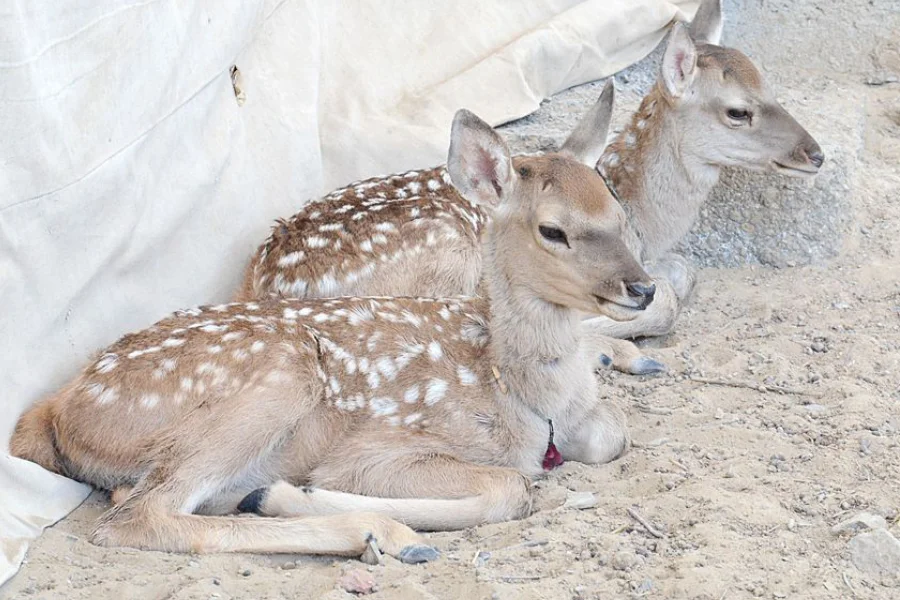
Turkmen also built a precise, stage-specific vocabulary for the young of different animals, entirely separate from the adult name. A gazelle fawn is a tokgar or tokar. A foal of the kulan, or wild ass, is a goduk. A young hare is a chebshek. A tadpole — literally “dog-fish” — is an itbalyk. A hawk or falcon chick still in the nest is a balagush. A young bird not yet fully feathered is a gamyshganat. A bird on its first flight is an uchurym. A fish newly hatched from the egg is an awyja. A few more specific growth-stage terms — etene, gyzyletene, kotenek — round out a vocabulary far more granular than English has for the same purpose.
From Hunted to Herded: How Naming Evolved Over Time
Linguists studying this vocabulary see it as following the arc of human subsistence. The earliest animal names likely belonged to wild game hunted for meat, to fur-bearing predators, and to fish — the animals earliest and most directly tied to survival. As domestication spread, a parallel vocabulary emerged for livestock and other domestic animals. Later, as farming expanded across the region, names appeared for the small creatures that farming itself brought into daily contact with people: crop pests, beneficial insects, and rodents.
Falconry and the Two Kinds of Hunting Birds
Hunting held a central place in that early economy. Nowhere is that clearer than in the vocabulary built around falconry birds. Turkmen tradition sorted hunting birds of prey into two groups. The grouping depended not on species, but on how someone acquired the bird. Hunters who took a bird as a chick, straight from the nest, called it a balagush — a nestling. Hunters who caught a bird as an adult, using nets or snares, called it a torgush — a net-bird. Within these two groups, individual species carried their own names: algyr, baz, garchgay, tarlang, tugun, utelgi, and shungkar among them. Shungkar is the best-documented of these. Central Asian falconry traditions share this term — compare Kazakh sunkar — for the saker falcon, historically the most prized hunting bird of the steppe and desert. The others name related hawks and falcons. Their exact modern equivalents would benefit from review by a specialist in regional ornithology before publication.
Recommended
Source: mineco gov tm