The Magnificent Mountain Rams of Turkmenistan
The mountain rams of Turkmenistan rank among the most striking animals of the country’s highlands. The nature of the western Kopetdag is rich in plants and wildlife. In fact, the region is home to 52 mammal species. Among them, the urial — known locally as aýrak — stands out as one of the most beautiful. It belongs to the order Artiodactyla and the family Bovidae. Moreover, it has long been a symbol of the wild beauty of Turkmenistan’s mountains.
Three forms of mountain ram live across the country, and each is tied to its own range. International science groups all of them under the urial, Ovis vignei. This wild sheep is listed as Vulnerable on the IUCN Red List. It is also protected under the CITES convention on trade in endangered species.
Three subspecies across the country’s mountains
The Bukhara ram lives along the ridges of the Köýtendag mountains and on the nearby heights of Uzbekistan and Tajikistan. The Turkmen mountain ram is the most widespread. For example, it occurs in the southern woodlands of Garabil and between the Guşgy and Murgap rivers. It also ranges across Badhyz, the Kopetdag, and the Lesser and Greater Balkan ranges. Finally, the Ustyurt ram roams the shores of Garabogazköl, Mangyshlak, the Ustyurt plateau, Gaplaňgyr, Akjagaýa and other parts of the Trans-Üngüz Karakum.
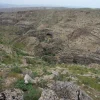
These graceful, increasingly rare animals are protected in the Kopetdag, Sünt-Hasardag, Badhyz, Köýtendag and Gaplaňgyr state nature reserves. The largest population of the Turkmen mountain ram lives in the central Kopetdag. There, the animals form separate herds along the foothills, and their overall range stays patchy. Within the Sünt-Hasardag State Nature Reserve, large herds gather around the Sünt-Hasar mountains and across the Aýdere and Çendir plains. The rams climb to heights of 2,500 to 3,000 metres above sea level.
How the mountain rams live
Mountain rams favour wide, grassy mountain steppe, hilly uplands, desert heights and steep slopes. They flee from predators by hiding among rocky cliffs. Meanwhile, pressure from grazing livestock often pushes them onto harsher, rocky ground. Wolves are their main enemy. In several areas, the rams are also a key prey of the leopard.
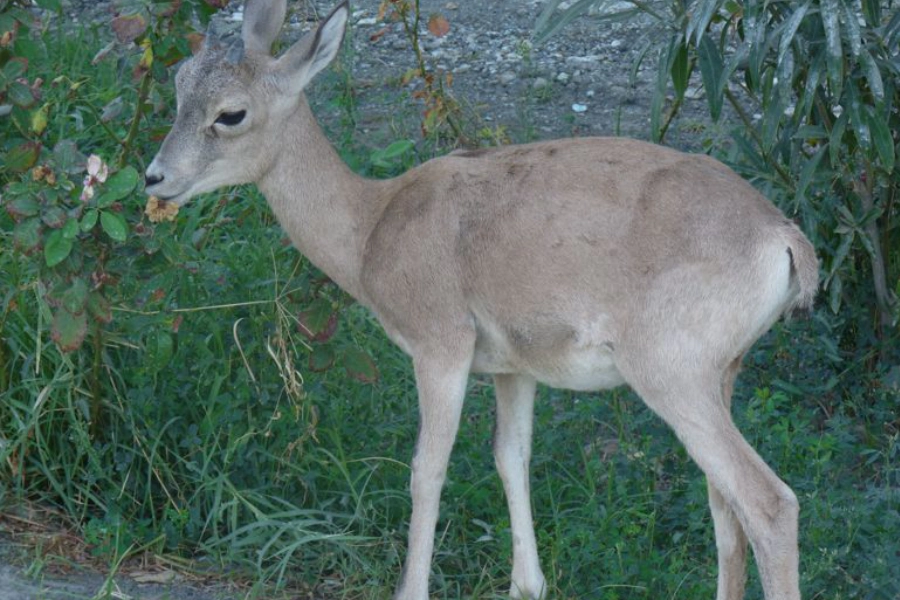
The Turkmen mountain ram is a handsome, slender animal. It has a light body, long legs, a strong neck and a head it carries high. Its curved horns are striking — broad and sweeping in some individuals, with coarse ridges along their length. The body measures 110 to 200 cm long and 65 to 125 cm at the shoulder. Furthermore, the horns reach 67 to 190 cm. Local males weigh up to 80 kg, while ewes weigh around 46 kg.
In the summer heat, the rams seek out water sources and gather in safe places nearby. Then they return to the springs again and again. Like most hoofed animals, they graze in the early morning, towards evening and sometimes at night. During the hottest hours, however, they rest.
Herds, breeding and young
Mountain rams live in herds, much like other hoofed animals. A herd can reach 50 to 100 head, and the animals form these larger groups during the cold season. Before lambing, the ewes split off from the herd. As a result, only the young and older animals stay behind. In summer the rams scatter into small groups or break apart across the open country. These are mostly ewes with lambs, while the males move separately.
During the rut, the animals form small groups of two or three males with several adult ewes and lambs. Ewes reach maturity at two years and males at three, and some begin breeding from that point. Most ewes, however, only breed after their third year. Males join the rut after four years. By six or seven, they contribute most to the population. The rut runs through November and December and lasts close to a month, with several ewes to each male. Rivalry among the males is common. Older males do not drive the young rams from the herd. Still, they keep them away from the ewes.
Gestation lasts a little over five months. In late April and early May, an ewe gives birth to one lamb, often two, and rarely three. Four or five days later, she rejoins the herd with her young. Suckling continues into autumn, although a lamb begins nibbling grass at about a month old. The predators of the young include the leopard, the striped hyena and the wolf. In addition, jackals and foxes can threaten lambs in their first weeks.
Protection and the work at Sünt-Hasardag
The mountain ram is a declining, rarely seen species. It is included in the Red Book of Turkmenistan (1996). It also appears in the CITES list of species banned from international trade (1997). The animals are protected in the Badhyz, Kopetdag, Sünt-Hasardag and Gaplaňgyr reserves. The biodiversity breeding centre of the Sünt-Hasardag State Nature Reserve keeps seven head and provides them with varied feed. As a result, the animals breed there every year.
Recently, on 21 April 2024, a young lamb with an injured leg arrived from the Balkan Province Department of Environmental Protection. Staff splinted the leg, and treatment lasted close to two months. Hanmeňli Hojamämmedowa, the officer responsible at the biodiversity centre, then took over its care. For more than three months, she fed the lamb on milk, nutritious feed and fresh alfalfa. Afterwards, the lamb recovered and grew used to people. Each morning, it follows Hanmeňli into the fields and grazes on different grasses at her side. Now it moves about calmly among people. Taming this remarkable creature came easily. Moreover, there are plans to show the lamb at state events in the Magtymguly district — a way to awaken public feeling for Turkmen nature.
For travellers, watching these animals roam freely along the Sünt-Hasardag ridges is a rewarding experience. The reserve’s staff also use the achievements of modern science. For instance, they set camera traps where the rams live and along their trails. In this way, they gather valuable data on feeding, the rut and the breeding season. They also carry out outreach through television, newspapers and magazines, and among local communities, explaining why these animals matter.
Studying the wealth of Turkmen nature on a scientific basis, and enriching the population of the mountain rams, continues an ancient way of life. The Turkmen people have long stayed in contact with the living world and drawn on its abundance.
Recommended

Source: mineco gov tm