The History of Rose Cultivation in Turkmenistan
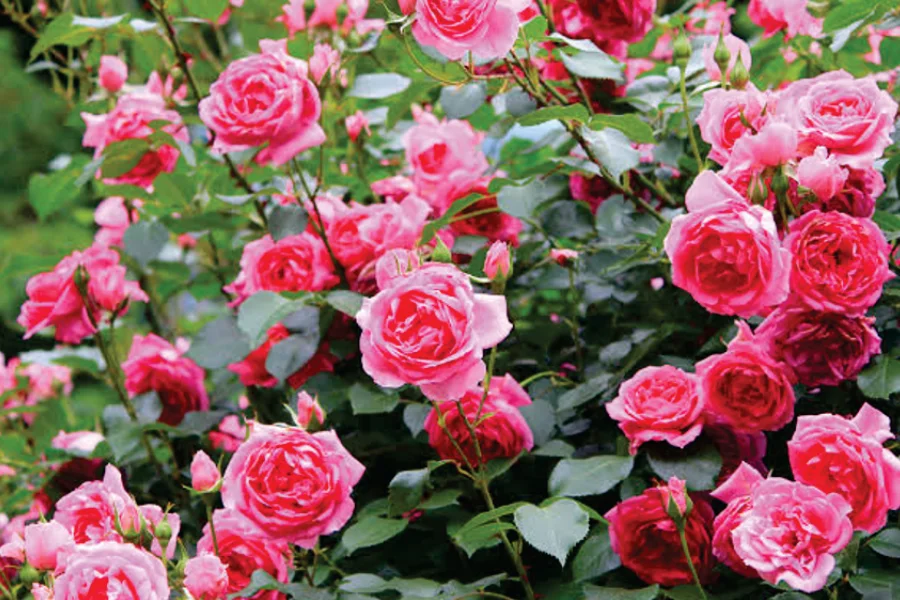
Since ancient times, the rose has drawn people in with its fragrance and its shifting play of color. It has added beauty to gardens across continents and centuries. Generation after generation of growers refined its forms and varieties. The rose became one of the most beloved ornamental flowers of all, and its stylized outline still recurs in the patterns of Eastern carpets and textiles. The story of rose cultivation in Turkmenistan is part of this much longer history. It stretches back to the earliest gardens of the ancient world.
Ancient Origins: From Babylon to Persia
The rose’s cultivated history reaches far into the past. Historians still find it hard to pinpoint exactly when early civilizations first began growing it. Some accounts place the rose alongside the grapevine, the apple, the apricot, and the olive. Ancient Babylon already held all of these plants in high esteem.
Persia’s devotion to the rose ran especially deep. People prized rosewater made from its petals, and the country earned the name Golestan, the “land of roses.” From Persia and Asia Minor, the flower spread to ancient Greece, and from there into Egypt and Rome. By the middle of the first century BCE, Rome was importing large quantities of roses grown in Egypt.
Herodotus, Theophrastus, and the Classical Rose
The historian Herodotus recorded that the garden of King Midas in Macedonia held roses with sixty petals each. The naturalist Theophrastus, writing around 300 BCE, described where roses originated and how growers propagated them. He also detailed the differences between wild and cultivated forms.
Several rose types were already common in gardens by that period. These included the Damask rose (Rosa × damascena Mill.), the Centifolia rose (Rosa × centifolia L.), and the Moss rose. The Moss rose is a fragrant sport of the Centifolia, historically catalogued as R. muscosa Ait.
Europe’s Wild Roses and Early Hybrids
Starting in the 12th century, European gardeners turned their attention to wild roses. Key species included the dog rose (Rosa canina L.), the field rose (Rosa arvensis Huds.), the sweet briar (Rosa rubiginosa L.), and the Alpine rose (Rosa pendulina L., historically recorded as R. alpina L.). These species crossed easily with one another. They produced natural hybrids that breeders eagerly selected. In Russia, gardeners of the 12th and 13th centuries propagated the common dog rose both as an ornamental and for medicinal use.
Continued crossing between wild roses and their cultivated relatives expanded the range of garden forms. Breeders produced the hundred-petaled or Centifolia rose, the moss-flowered Centifolia, the pompon Centifolia, the Damask, the White rose (Rosa alba L.), and the Portland rose (Rosa × portlandica hort.), among others.
Today the genus Rosa L. forms a major botanical group in its own right. Most species grow upright to a height of 1–2 meters, though shapes and habits vary widely. Some roses are deciduous; others stay semi-evergreen or evergreen year-round. Their stems range from thorny to nearly thornless — the Alpine rose variety ‘Inermis’ (also called ‘Morlettii’), for instance, stands out for its almost thornless canes. Early botanical literature also records one striking specimen: a wild dog rose, said to be around 300 years old, standing some 13 meters tall with a 50-centimeter trunk diameter, growing beside a cathedral in Hildesheim, Germany
The Tea and Bengal Rose Revolution
The China rose (Rosa chinensis Jacq.) and the Bengal roses reached Europe from India at the end of the 18th and start of the 19th century. Their arrival opened a new era in rose breeding. Growers crossed these newcomers with established European varieties, laying the groundwork for many of the prized cultivars grown today.
Pliny the Elder on the “Queen of Flowers”
The Roman writer Pliny the Elder devoted part of his sprawling Natural History, a work of 37 books, to roses. He described a dozen cultivated rose forms alongside a dozen other ornamental plants, and he praised the rose as the finest adornment of fields and gardens.
Historical evidence points to two main centers of origin for the cultivated rose: Asia Minor — including Transcaucasia and Persia — and East Asia, namely China and India. From there, garden roses spread along three broad paths:
- The Gallica group (Rosa gallica L.) moved from Asia Minor and the Aegean islands through Macedonia into Greece. Roman gardeners later adapted it, and it went on to reach Egypt, then Spain, then France.
- The Chinese rose group — the China rose and the memorial rose (Rosa wichuraiana Crép.) — traveled from China to India in antiquity. It reached France and England from India in the early 19th century.
- The French breeding wave of the 19th century took new garden varieties, developed in France, out to the rest of the world by the mid-1800s.
Central Asia’s Rose Trade: Bukhara and Beyond
Rose cultivation in Central Asia has equally deep roots. The flower earned a reputation across the region as the “rose of legend.” In the 9th and 10th centuries, Bukhara, capital of the Samanid state, traded rose-based perfumes, oils, attars, and seed stock with the Near East, Russia, and China.
Roses in Turkmenistan Today
Historical accounts describe roses filling the courtyards of ancient Merv and Urgench with fragrance. That legacy continues today. Researchers at Turkmenistan’s State Central Botanical Garden trial rose varieties from around the world. They test how well each one adapts to the country’s soil and climate, then recommend the strongest performers for parks, gardens, and public green spaces.
Roses remain woven into everyday life in Turkmenistan. They mark celebrations and weddings, and they stand as a lasting symbol of peace, joy, and natural beauty.
Recommended
Source: mineco gov tm