Through the Lens: Photographing the Desert Sparrow in Turkmenistan’s Karakum Desert
Nature lovers who travel across Turkmenistan often find themselves struck by the beauty of its wild landscapes. Scientists study the region’s plants, wildlife, and birds with great dedication. Musicians capture that same spirit in song. Painters render it on canvas. Photographing nature is its own craft. It demands patience and a practiced eye to reveal the desert’s hidden character.
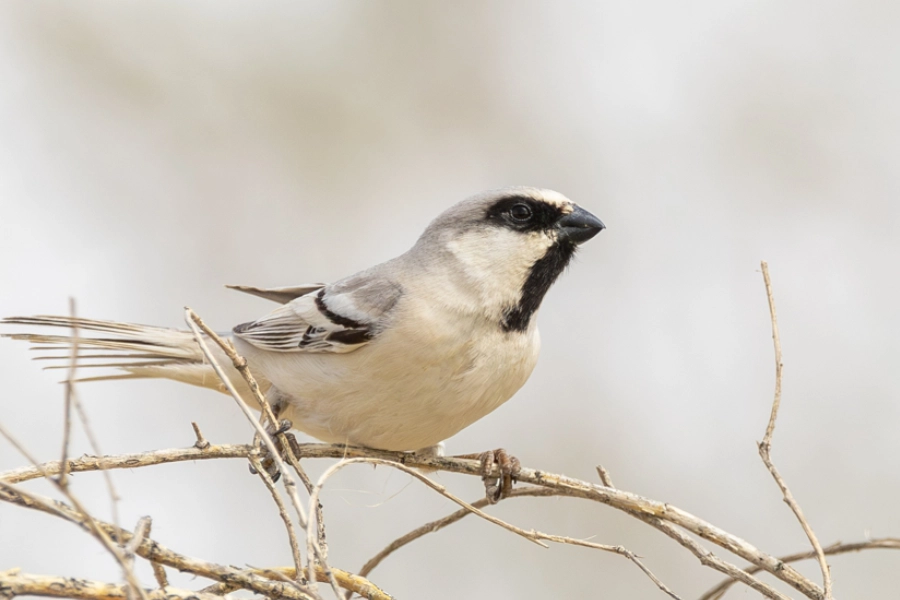
Photography has been a passion of mine since childhood. A professional background tied closely to the natural world deepened my interest in its finer details. Each season offers something new to capture. That is what keeps me returning to the open plains of the Karakum and to the mountains in search of wildlife worth photographing. This past April, I set out into the sands of the Repetek State Biosphere Reserve. My goal: to photograph the desert sparrow (Passer simplex), a species that Turkmenistan’s Red Data Book lists as rare.
An Unexpected Encounter Along the Way
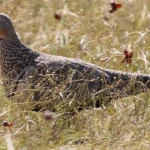
I made my way through fixed sands scattered with low shrubs. There, I came across a Turkestan Ground-Jay, known locally as çürçüri. This bird is a Central Asian endemic. Birders often call it an ornithological emblem of the Karakum Desert. It stays year-round in semi-fixed and fixed sands and in sparser stretches of clay-sand terrain. Nesting begins in April. Chicks hatch in May. Several places across the Karakum even carry the name “Çürçüri,” a mark of how familiar this bird is here. Getting a usable shot took several attempts at patient waiting. Eventually the bird’s own curiosity brought it close enough for a clear photograph.
Tracking Down the Desert Sparrow
Ornithologist Eldar Rustamov noted that foreign travelers and researchers visit Turkmenistan every year. Many come specifically hoping to see and photograph the desert sparrow. Turkmenistan’s Red Data Book and the IUCN Red Listboth list the species. Within the country, it lives only in the Eastern Karakum, the trans-Amudarya sands, the Central Karakum, and the Sandykly desert. Part of its range overlaps with the Repetek State Biosphere Reserve and the Bereketli Garagum State Nature Reserve. There, it favors fixed sands where black saxaul, selin, cherkez, and calligonum grow.
This trip’s focus lined up well with a chance to observe desert sparrows nesting in large saxaul stands. Approaching the birds calls for restraint. Every photographer tries to avoid disturbing them near the nest. So I spent long, quiet stretches sitting among the saxaul shrubs, watching them build their nests. Two breeding pairs eventually came into view. I photographed both the male and female clearly.
Building a Visual Record for Conservation
In 2026, precise photographic equipment captured images of the desert sparrow and other desert wildlife. These images will add to the scientific and photographic archive that the Repetek State Biosphere Reserve holds. Beyond that record-keeping value, photography lets me share the Karakum’s natural wonders with fellow citizens and with audiences abroad. That is what keeps this work worth returning to, season after season.
Recommended
Source: mineco gov tm