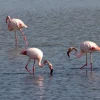
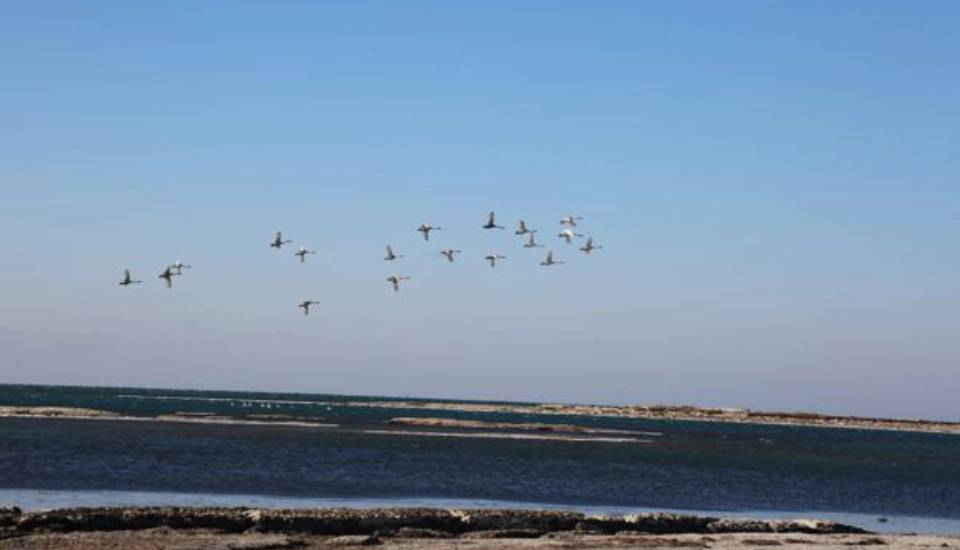
Migratory waterbirds in Turkmenistan rely on the wetlands and coastal areas along the Caspian Sea. Every season, ducks, geese, waders, grebes, and gulls travel south from Russia and Kazakhstan. They respond to food availability, water levels, climate, and human activity. The birds arrive each year to rest, feed, and overwinter, and together they form unique ecological communities.
Seasonal Arrivals Along the Caspian Coast
Some species arrive early. Redshanks and large geese reach the coast in August and September, then continue south once they regain their strength. Others stay through the winter, from November to February. During these months they feed in shallow waters and marshes, then return north in March and April to their breeding grounds. Several species also nest on small islands near Türkmenbaşy and the Balkan region, where they find shelter and protection. Notable birds include the pied avocet, black-winged stilt, ruddy shelduck, mallard, and green-headed duck.
International Recognition of the Wetlands
These wetlands have held international status since 1971. That year, the Ramsar Convention added the Türkmenbaşy and Northern Çeleken lagoons to its list of valuable wetland areas. In 1976, the IUCN awarded the Caspian State Nature Reserve a special diploma. In 2008, Turkmenistan rejoined the Ramsar Convention as an independent state.
Surveying Migratory Waterbirds in Turkmenistan
Researchers count migratory waterbirds in Turkmenistan as part of a global effort. Since 1967, more than 100 countries have run simultaneous winter counts every January. At home, the Caspian State Nature Reserve organizes these counts under ornithologists such as Dr. Eldar Rustamov and Alexander Shcherbina. Teams track species, population numbers, migration paths, and resting areas. They use small motorized boats on the water, vehicles along the shore, and surveys on foot. You can read more in our coverage of recent winter bird surveys.
Protecting Biodiversity for the Future
Reserve experts also guard biodiversity against natural and human threats. They safeguard rare and endangered species, preserve the beauty of the wetlands, and protect these habitats for future generations. This work supports ecological balance. It also helps Turkmenistan meet its international environmental commitments. The seasonal return of these birds shows the ecological richness of the Caspian coast, and it underlines why ongoing research, monitoring, and conservation must continue.
Source: mineco gov tm