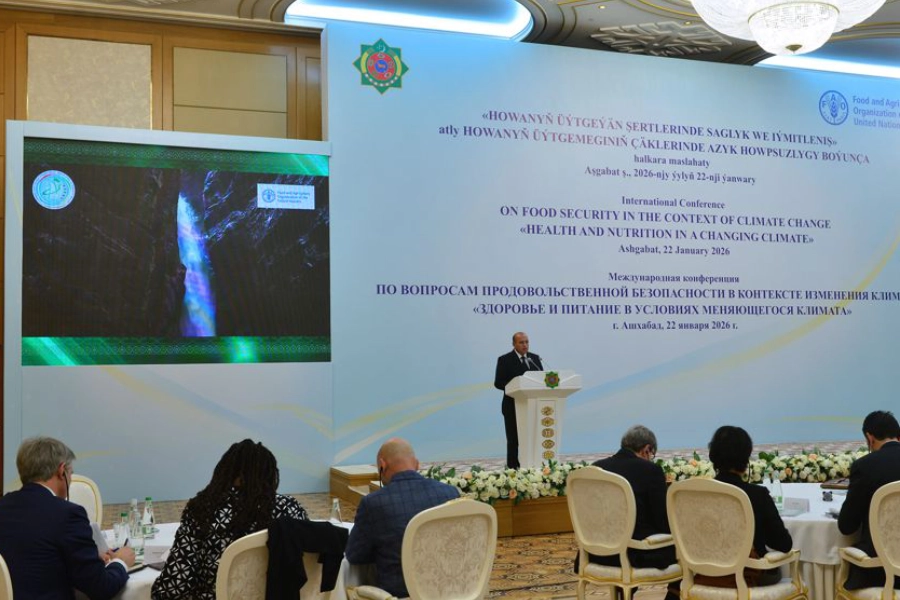
Food Security in Central Asia: Turkmenistan FAO Conference 2026
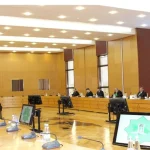
Food security in Central Asia took center stage on January 22, 2026, when Ashgabat hosted a landmark international conference on climate change, nutrition, and public health. Specifically, officials from Turkmenistan’s key ministries joined representatives from the UN Food and Agriculture Organization (FAO), the UN Development Programme (UNDP), and delegations from Kazakhstan, Kyrgyzstan, Uzbekistan, Tajikistan, Iran, and Russia. Together, they addressed the growing overlap between climate disruption, agricultural sustainability, and human wellbeing across the region.
Turkmenistan’s Early Climate Leadership
Turkmenistan adopted a National Climate Change Strategy before most regional neighbors. As a result, this document now guides green technology integration across agriculture and industry. Additionally, the National Forest Programme sets concrete land restoration targets. Meanwhile, the “Altyn Asyr” lake project channels drainage water back into irrigation systems. Consequently, it unlocks new arable land and expands opportunities for the livestock sector. Furthermore, water-stressed countries across the region watch this model closely. Learn more about Turkmenistan’s environmental initiatives and regional water resource projects on our website.
What Climate Change Means for Food Security in Central Asia
Rising temperatures hit Central Asian agriculture hard. Moreover, soil salinization spreads steadily each year. As a result, water grows scarcer and crop yields fall. Furthermore, nutritional value drops alongside productivity. Therefore, these combined pressures demand coordinated, science-backed responses — not isolated national fixes. In particular, Turkmen researchers actively develop drought-tolerant, high-yield seed varieties. Additionally, they calibrate each variety to local soil and climate conditions. Consequently, this work directly supports long-term food supply stability across the region.
The One Health Framework
The “One Health” concept drew strong attention throughout the forum. Specifically, it connects human wellbeing, animal health, and environmental condition as a single system. In Central Asia, moreover, pastoral ecosystems and livestock chains tie directly to food security outcomes. Therefore, speakers argued that national climate strategies must embed One Health principles. As a result, this approach builds food systems that absorb climate shocks rather than collapse under them. Furthermore, Turkmenistan already implements this concept together with international partners under its national climate framework.
Climate Finance: Still a Bottleneck
Technical ambition across the region consistently outpaces available funding. However, participants called openly for more accessible international climate finance tools. In particular, UN specialized agencies play a critical role — both financially and technically. Additionally, countries need this support to modernize agricultural infrastructure. Moreover, they need it to validate adaptation approaches against international standards. As a result, delegates agreed to deepen data sharing and cooperation to move faster.
Four FAO Agreements: From Words to Action
The conference produced four concrete agreements between Turkmenistan and the FAO. First, the Ministry of Agriculture committed to integrated land restoration in climate-sensitive ecosystems. Second, the State Water Committee signed on to comprehensive management of the Amu Darya, Zarafshan, and Panj river basins. Third, the Ministry of Environment agreed to accelerate nature-based agricultural solutions. Finally, a fourth agreement targets Turkmenistan’s transparency obligations under the Paris Agreement. Therefore, these steps move the agenda from declaration to measurable implementation.
Building Long-Term Regional Cooperation
Participants left Ashgabat with a shared commitment. Specifically, strengthening food security in Central Asia requires sustained collaboration between governments, scientists, and international organizations. However, no single country can solve this alone. Therefore, delegates confirmed their readiness to deepen exchanges and push joint projects forward. Moreover, forums like this one build the relationships and frameworks that make collective climate action possible. Finally, participants called for regular follow-up meetings to track progress on agreed strategies and commitments.
Recommended

Source: mineco gov tm